One sentence to start
Make me a Tetris game with roguelike elements.
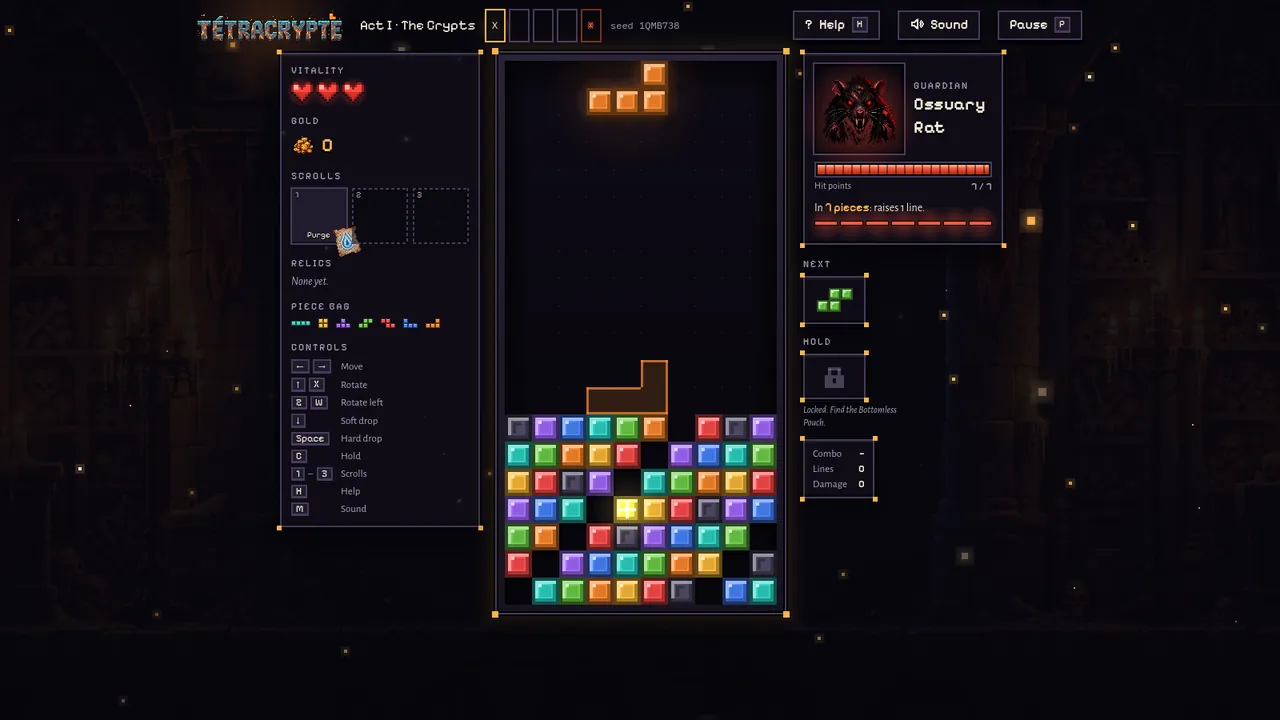
That's it. No design document, no mockup. Claude came up with and built a full concept: a descent into a crypt across three acts of five rooms. Each room holds a guardian, and you hit it by clearing lines: a Tetris deals 8 damage, combos add more.
The guardian strikes back on a fixed timer: rising lines, falling rubble, fog that hides the bottom of the well, pieces that speed up. Between fights you pick your path (elite, shop, sanctuary, mystery), collect relics that bend the rules, and you only get one life. Every run has a seed: the same seed replays exactly the same descent.
A playable first version in under twenty minutes
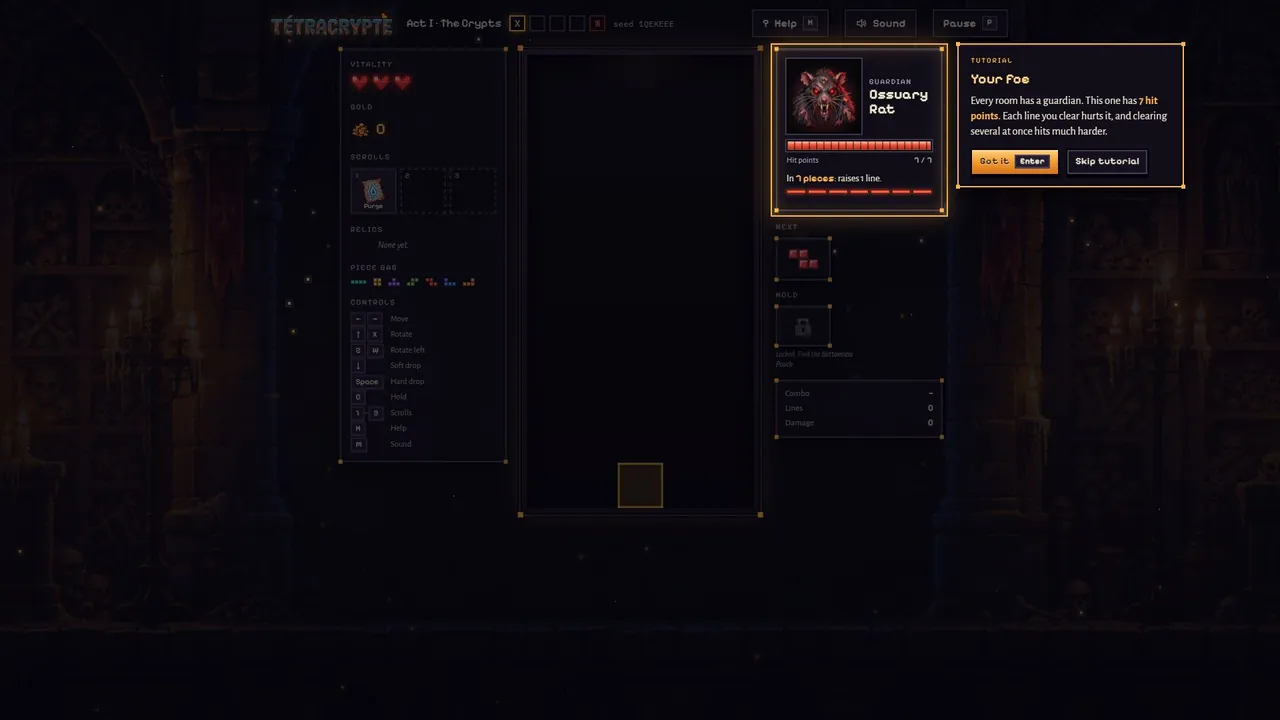
Version 1 was a single HTML file. No images at all: everything was drawn by code, from the blocks to the guardian's skull. But everything already worked: the map, the fights, the relics, the shop, the events, permadeath.
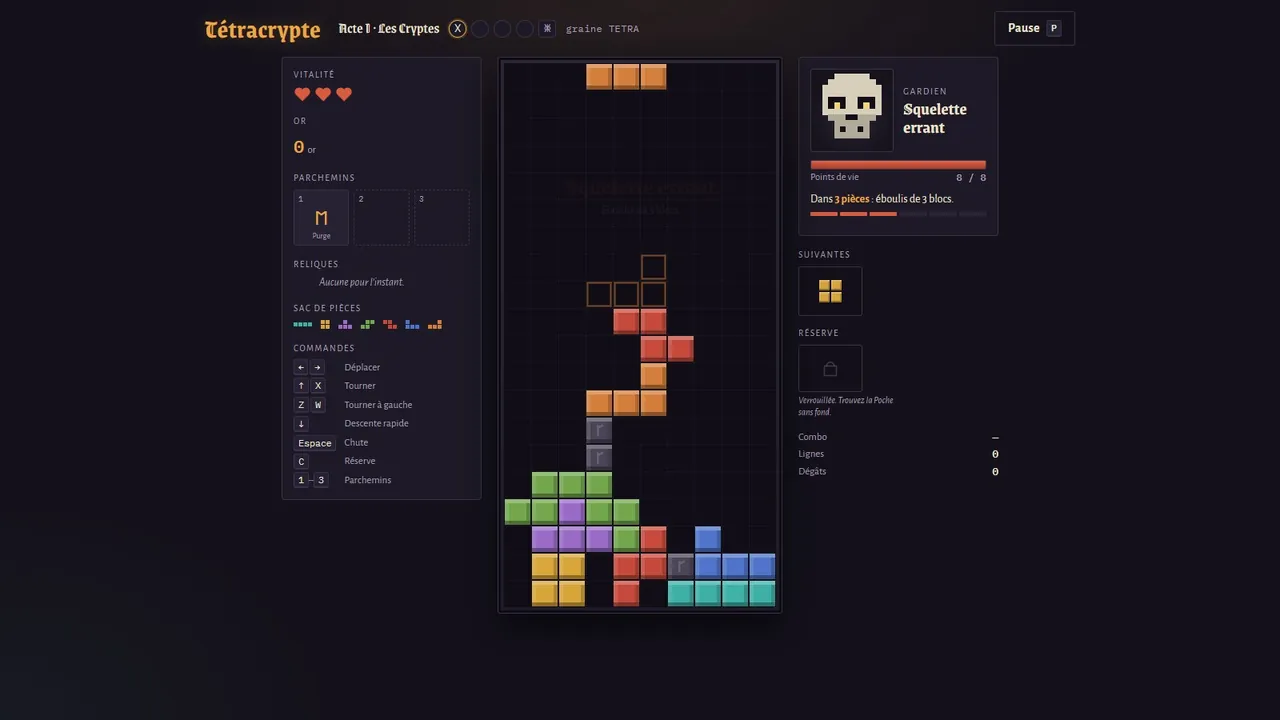
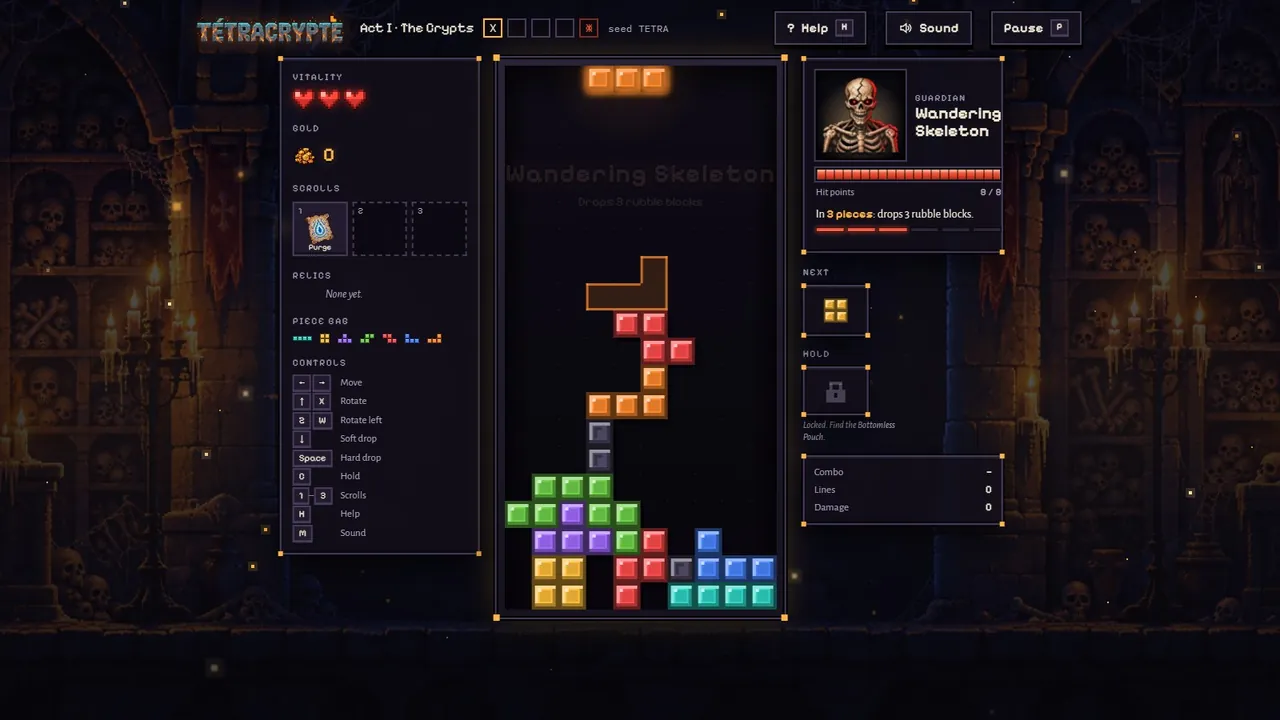 Version 1 · H+0:18Final version
Sound, generated with ElevenLabs
Can you use my ElevenLabs subscription to generate the music and sound effects instead?
I connected my ElevenLabs account to Claude. It wrote the prompts, ran the generations and wired in the results: 16 sound effects (rotate, lock, drop, line, Tetris, hit, rubble, heart lost…) and two music tracks, one for fights and one for bosses. Outside of fights the music is filtered, as if heard through the crypt walls.
Later that day I added a creaking sarcophagus with echo on start, a tiny thud when a piece lands, and the crypt's laughter… reserved for defeats. Total: 19 sound effects.
The art: generated pixel art, then cut out
Use the GPT Image 2.5 Flare model on ElevenLabs to make new art, modern 16-bit pixel art inspired by Dead Cells… so it feels like a modern indie game, with lighting effects and animations.
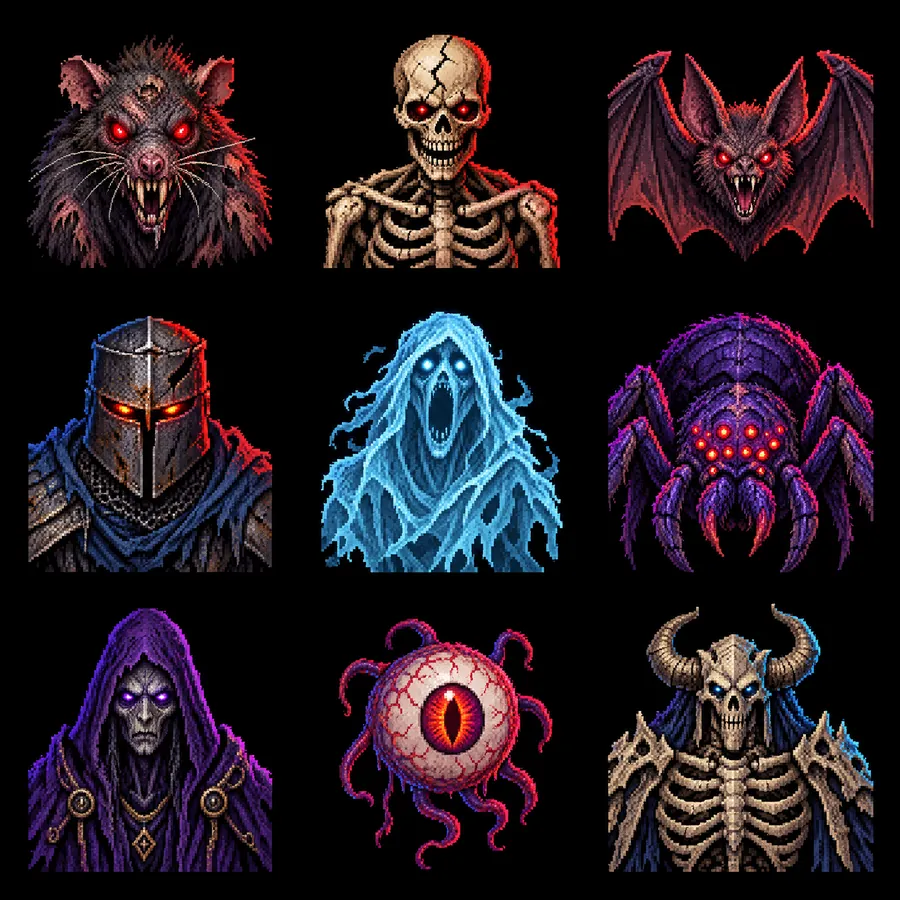
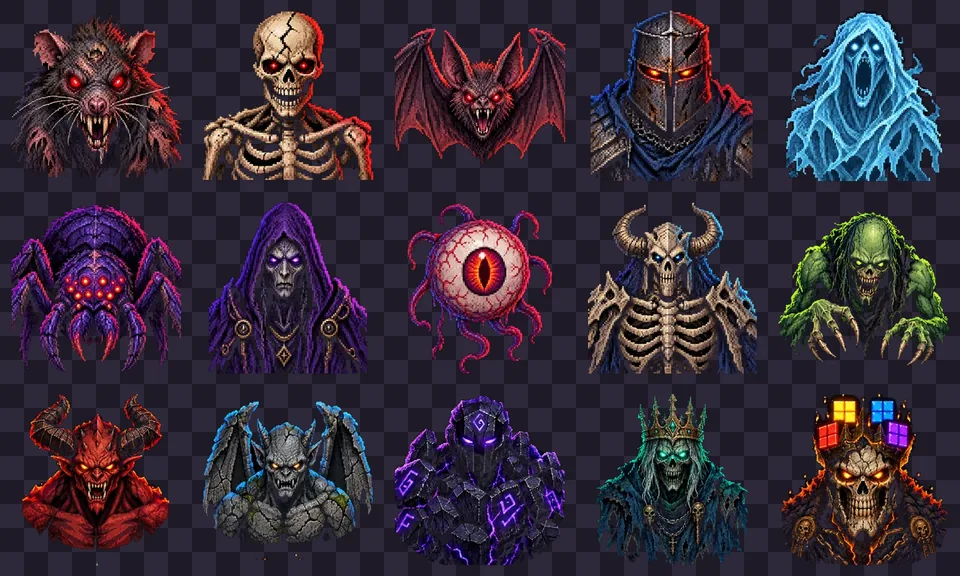
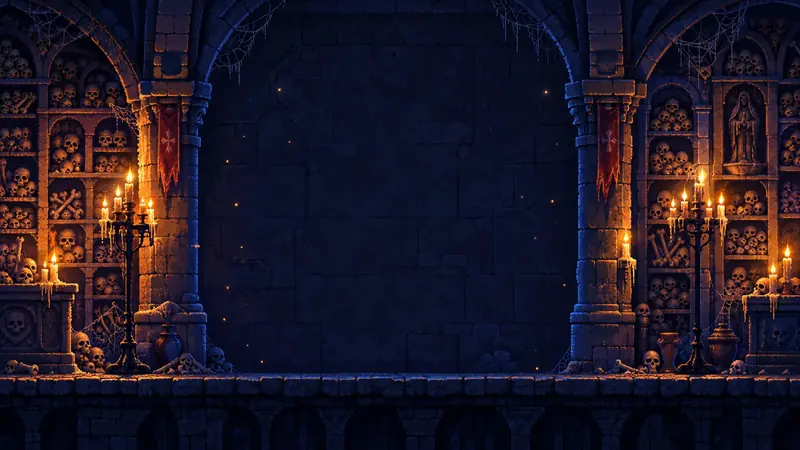
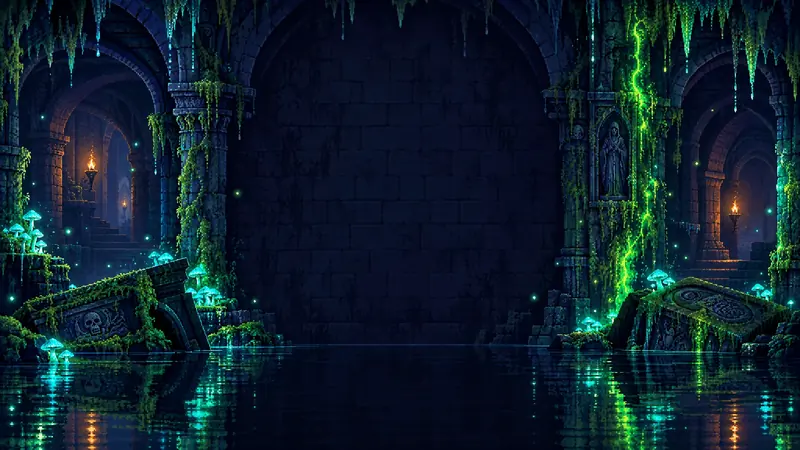
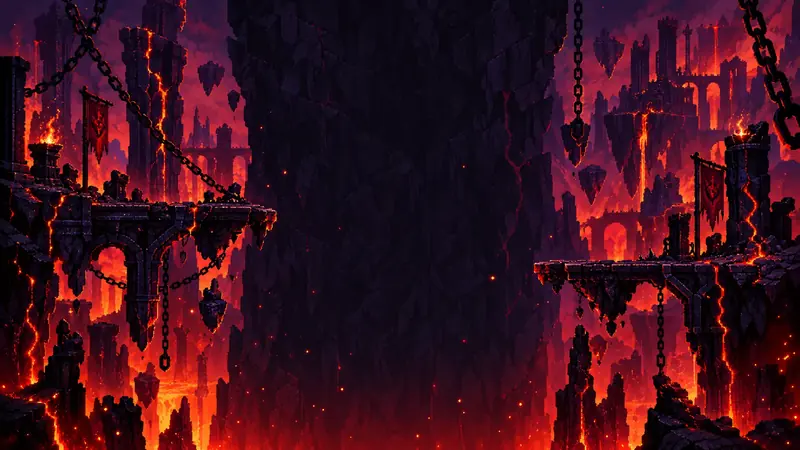
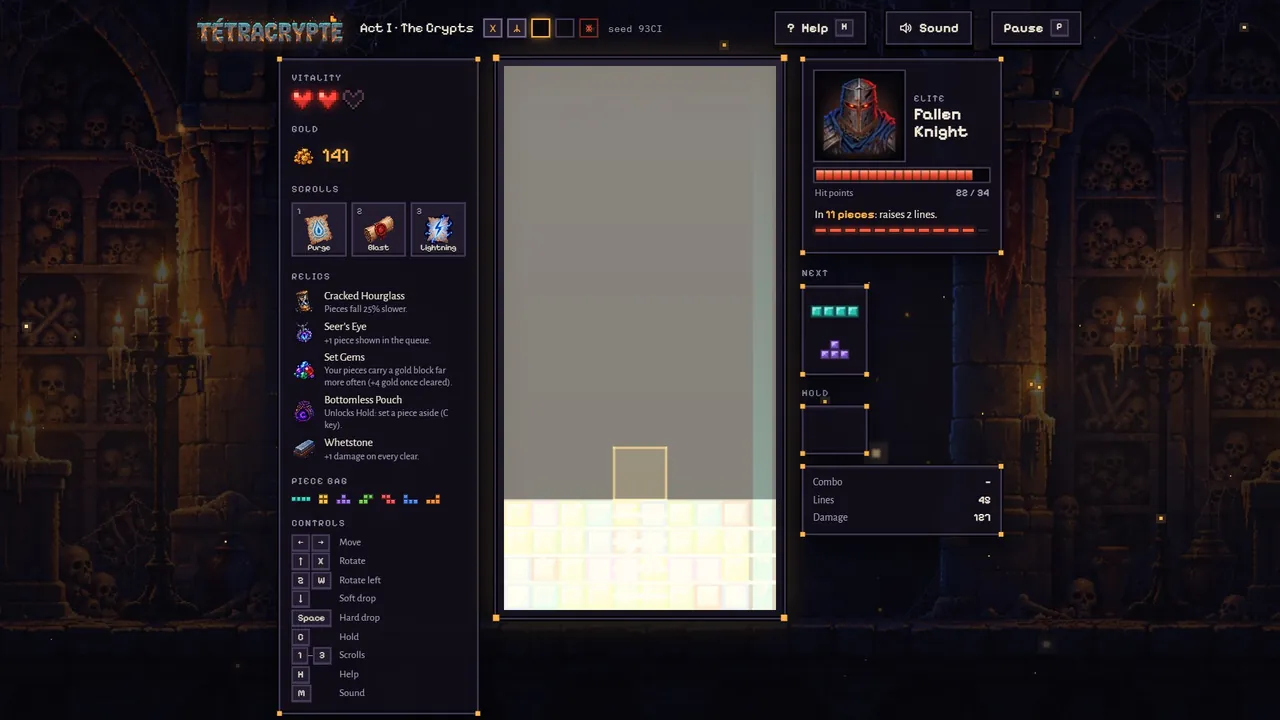
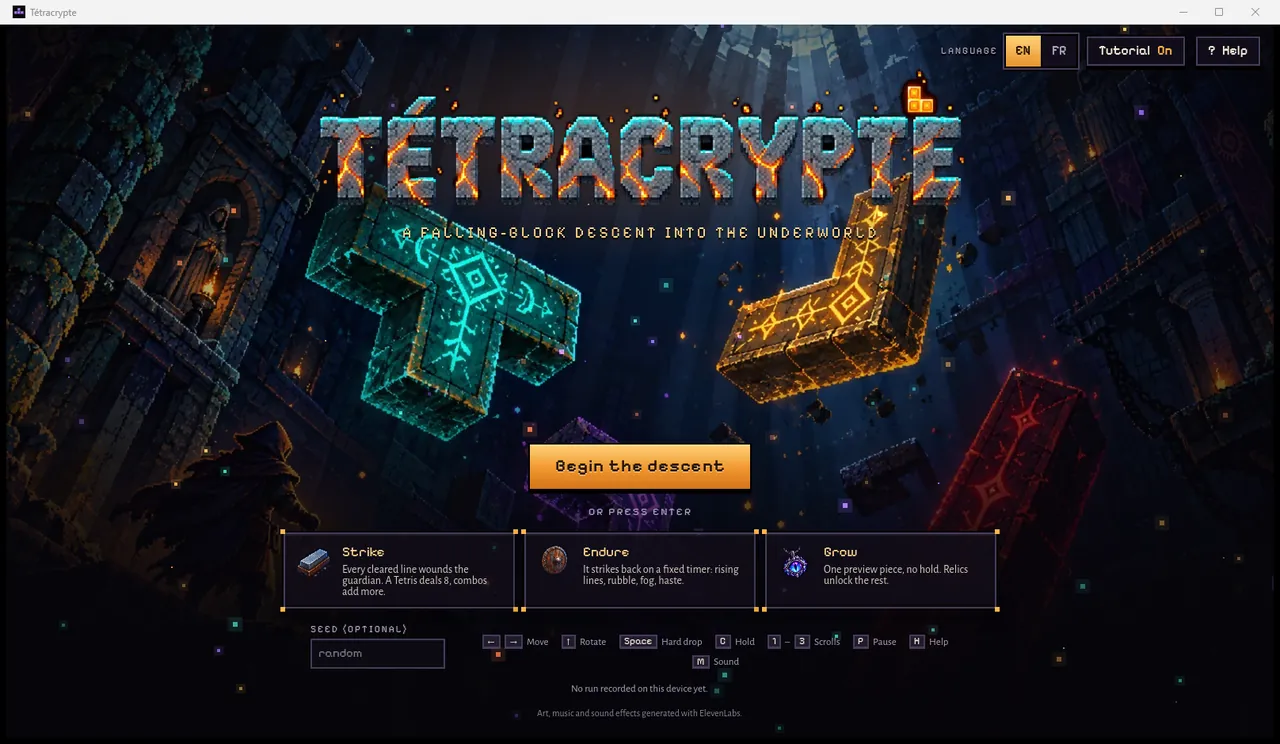
Claude generated the title screen, the logo, one background per act, the 15 guardians and 24 icons (18 relics, 5 scrolls, gold). Each sheet was produced in two variants so we could keep the best one.
The model renders its images on a black background. Claude cut them out automatically, erasing the black from the edges inward without touching the characters' dark outlines, then sliced them and packed them into transparent sheets the game reads cell by cell.
Polishing by voice, like working with a developer
Then I played and said what felt off, dictating my messages. Each remark became a change, tested and put back online.
- “The glow around the pieces is way too much, and it vanishes all at once.” It became subtle and now fades out.
- “A tiny, very light sound when the block settles.” Added, along with parallax: the background shifts slightly with the mouse.
- “A language picker, English by default, and a Help section.” The whole game is in English and French.
- Later, a progressive tutorial: 25 tips that only appear the first time a mechanic shows up, with a switch to turn it off.
A trailer voiced by the boss
Now make me a 16:9 motion-design video with game captures… punchy and rhythmic, like an indie game reveal at an Indie World showcase.
No editing software. Claude filmed the game frame by frame in an invisible browser, with a virtual clock to get perfectly sharp frames, then staged the key moments: the Tetris, the guardians, the king. The whole edit is locked to the tempo of the boss music, about 140 beats per minute.
The voice-over is the Tetrad King, the final boss: ElevenLabs' “Branok” voice with their v4 model, which actually acts the lines. Getting the balance right took three tries: voice too quiet, then music wiped out, then the right mix. The ending was re-cut so the music resolves on its last chord, with a final impact right after “Tétracrypte”.
- Another one… comes knocking at my well.
- Every line you break… I break back.
- One life. No second chances.
- Come down, then. I am waiting.
Online, for everyone
So anyone could play, Claude put the game online on Cloudflare, for free. It's a static site: 29 files, 6 MB, no server. Each player's best score stays in their own browser.
Ported to Godot, then a real .exe
Can you handle the conversion to Godot? But I want it to be as faithful as possible.
To get out of the browser, Claude rebuilt the game in the Godot engine: the logic translated function by function, the text carried over as is, every effect redrawn. Even the randomness is identical: the same seed gives exactly the same game on the web and in Godot, checked number by number.
To verify it, Claude automatically went through 25 screens with screenshots, and had a bot play six full runs at accelerated speed. The result: a single Tetracrypte.exe of 124 MB that you double-click to play.
What I take away from it
My role felt like a creative director's: say what I wanted, play, say what was off. Claude wrote the code, wired in the art and sound, and tested every step; ElevenLabs produced the images, the music, the sound effects and the voice.
Not everything came out right the first time. The glow, the voice-over mix and the readability of the acts in the trailer took several rounds. But each round took a few minutes, and that's what makes the process so exciting: you stay focused on the game.
Your turn to descend
The game is free and plays in your browser, with a keyboard. If you hit a fiendish seed, share it: it's shown at the top of the screen, and anyone can replay exactly the same descent.